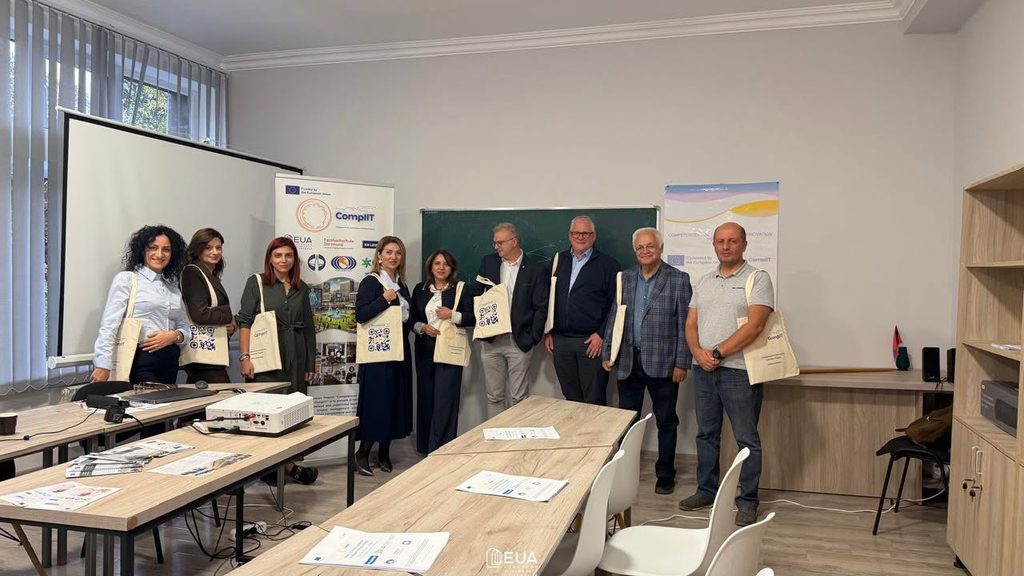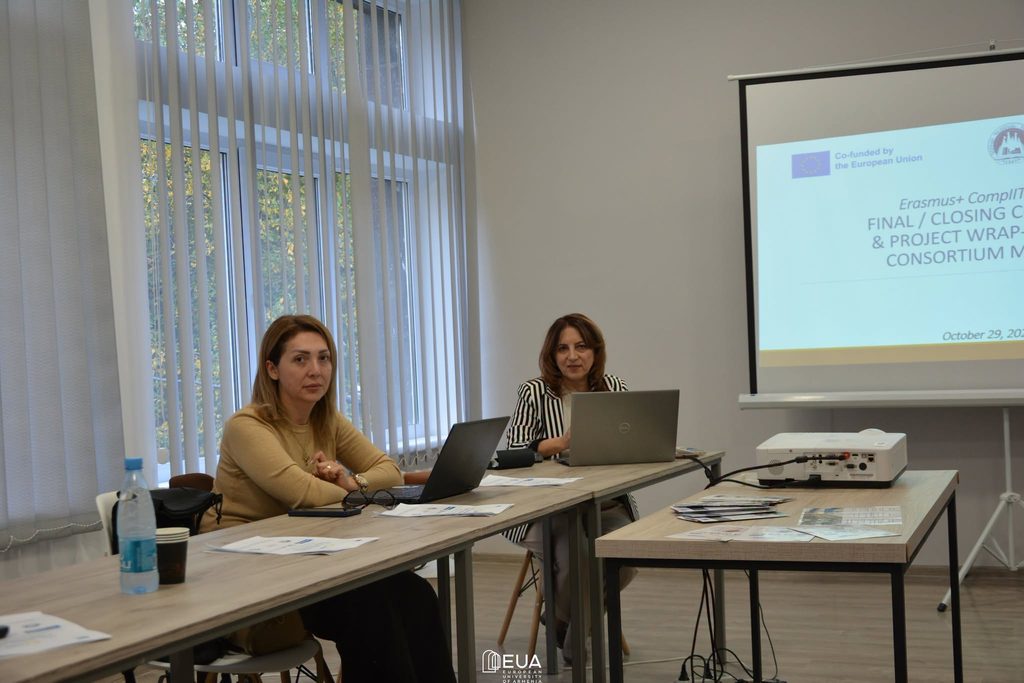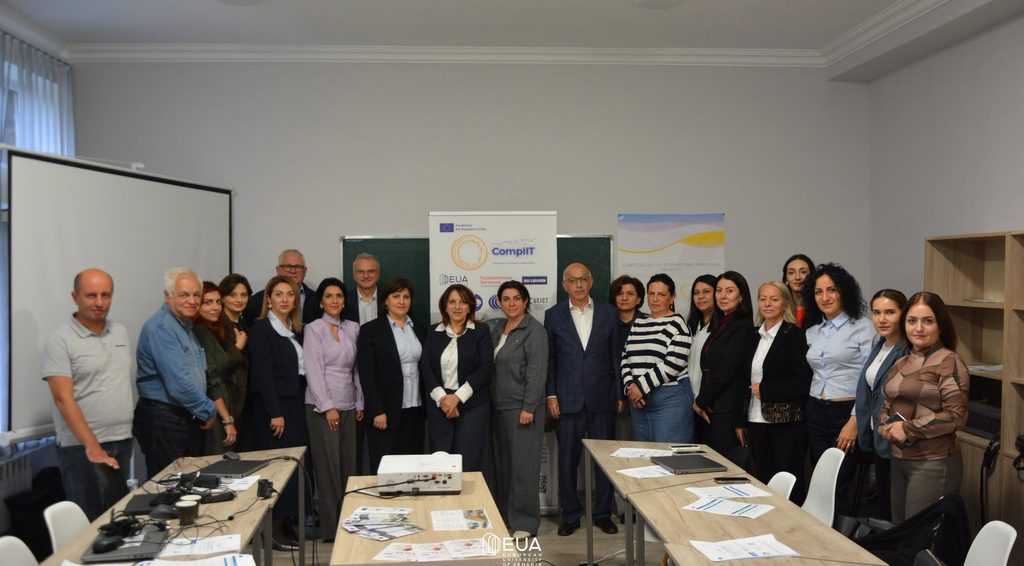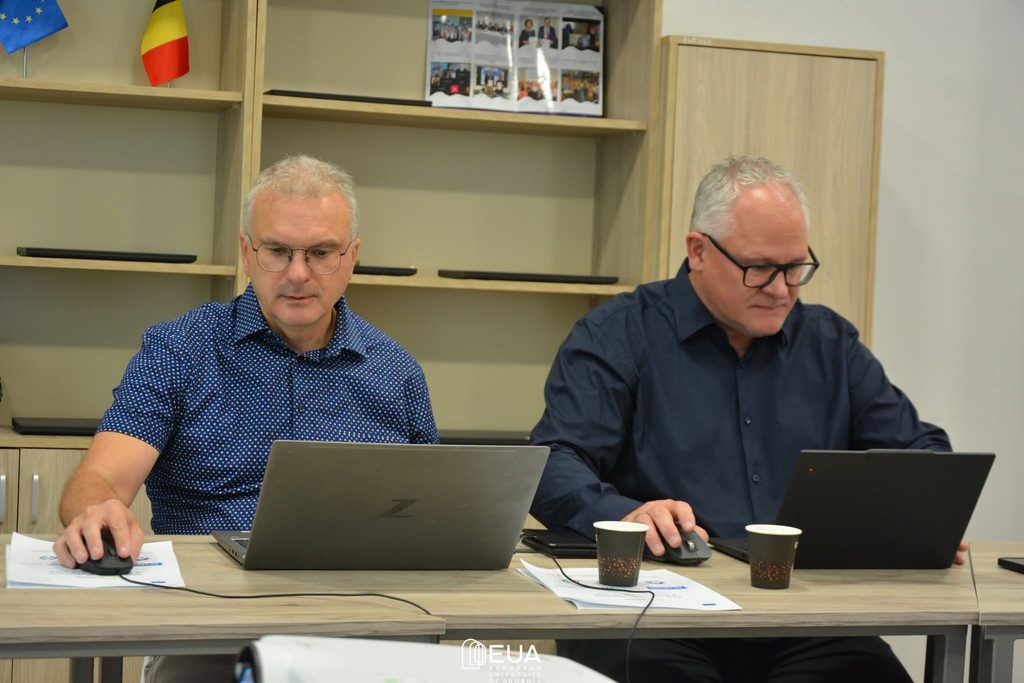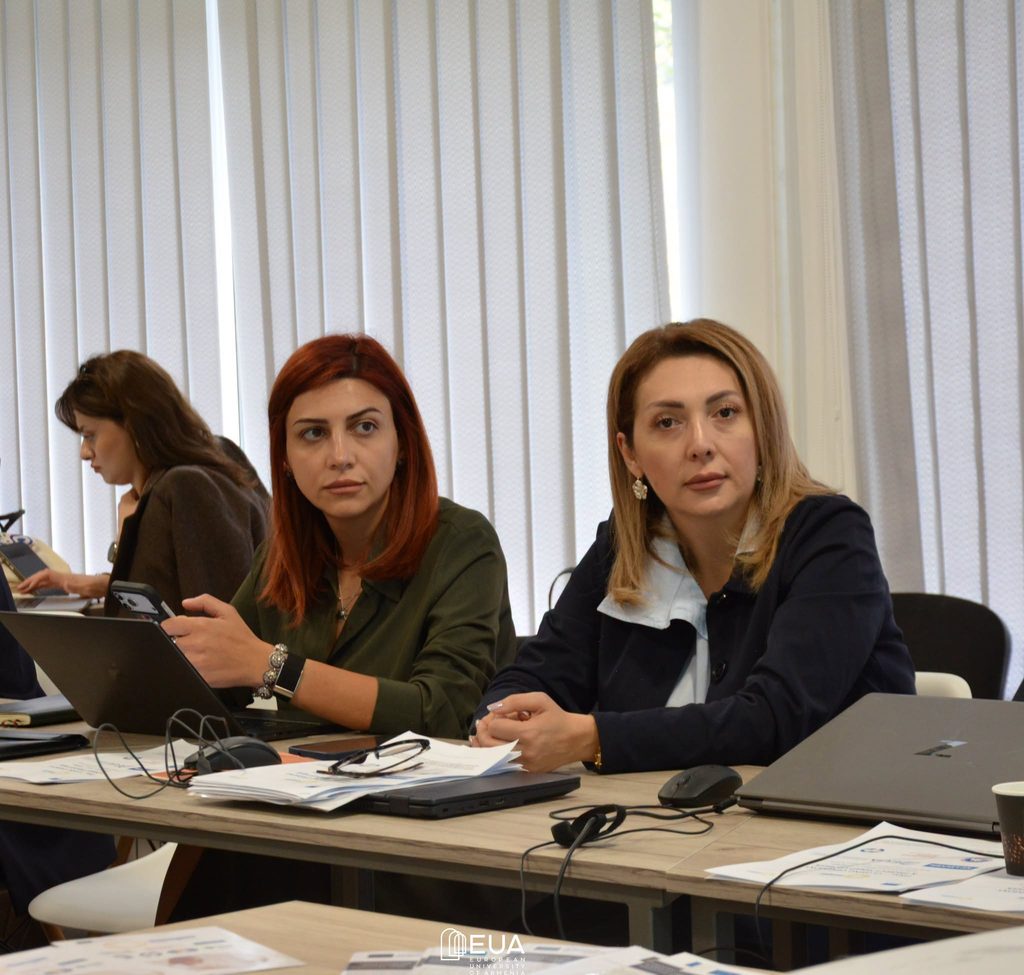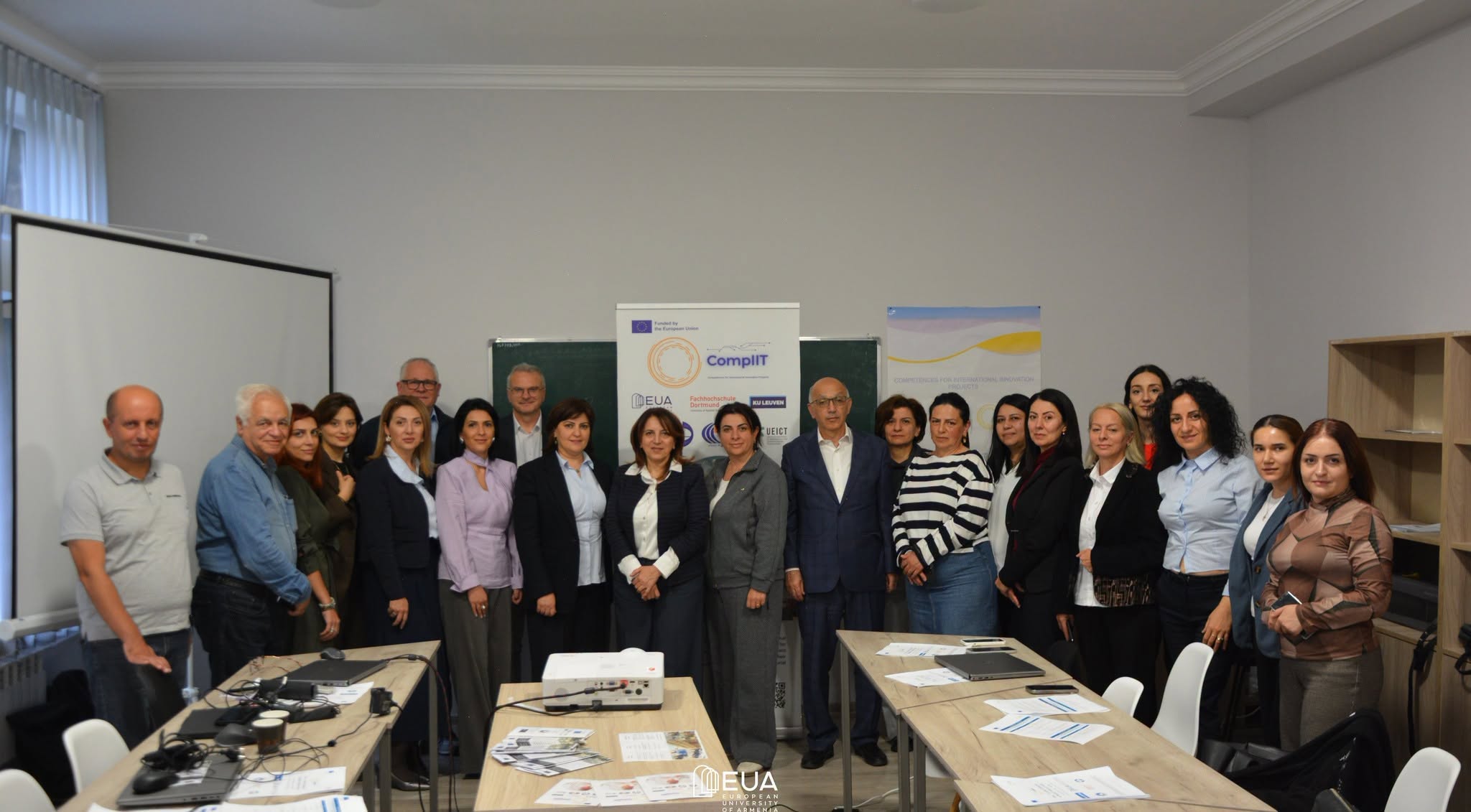
 On October 19–20, Goris State University hosted the final meeting of the Erasmus+ CompIIT (Competences for International Innovation Projects) project, coordinated by the European University of Armenia (EUA). The event brought together representatives of Armenian and European partner institutions to reflect on the project’s achievements and explore opportunities for future collaboration.
The EUA delegation was represented by Gohar Avetisyan, Vice-Rector for External Relations and Internationalization and CompIIT Project Coordinator; Karine Sargsyan, Head of the Department of Quality Assurance and Reforms and Project Contact Person; and Nvard Ohanyan, Head of the Internal Quality Assurance Division and member of the EUA Project Focus Group.
 The first day of the meeting, October 19, was dedicated to the work of the Project Steering Committee. Partners reviewed the progress and results achieved throughout the project, discussed measures to ensure the sustainability of its outcomes, and considered possibilities for continued cooperation.
On October 20, the program continued with welcoming remarks from representatives of the participating institutions, followed by training activities for academic staff and students. The sessions focused on innovative approaches to teaching and learning, the effective use of digital technologies, and the development of professional competencies.
EUA representatives contributed to the program by sharing their expertise in educational management, institutional cooperation, and the sustainable implementation of project results.
 Gohar Avetisyan led a session for academic staff entitled “Sustainable Use of Project Results and Further Development of Institutional Cooperation.” Her presentation highlighted ways to maintain and integrate the educational resources and digital infrastructure developed through CompIIT into institutional practices, while also emphasizing the importance of strengthening partnerships.
Nvard Ohanyan delivered a training session entitled “Artificial Intelligence in Virtual Education Management: Opportunities, Risks, and Management Challenges.” The session explored the potential of artificial intelligence in virtual learning environments, addressing both its practical applications and the challenges associated with its responsible use and management.
The academic staff training program also featured Pieter Arras, International Relations Officer at the Faculty of Engineering Technology of KU Leuven, who presented on “Integration of Generic and Professional Skills into Educational Programs and Teaching Practices.”
The student training sessions covered interactive learning, digital technologies, teamwork, and project management. Artur Khojabaghyan, Lecturer at the Department of Mathematics and Physics at Goris State University, conducted a session entitled “Learning Through Play: How Moodle and Artificial Intelligence Make Learning and Project Management Interactive.”
Dr. Carsten Wolff from Dortmund University of Applied Sciences and Arts joined the program online and delivered a session on “Agile Collaboration, Teamwork, and Communication in Virtual and Cross-Border Project Environments,” focusing on effective collaboration in international and digitally connected teams.
The final meeting served as an important platform for reviewing the results of the CompIIT project, exchanging knowledge and experiences, and identifying opportunities to build on the outcomes achieved through the partnership.
 The project’s final activities continued on October 22 with the CompIIT Project Final Conference, hosted by the Kapan Branch of the European University of Armenia.